What a 1990s Yellow Pages Strategy Taught Me About Marketing

Before digital marketing, the Yellow Pages were the battleground and those who understood how to use them strategically found opportunities others overlooked.

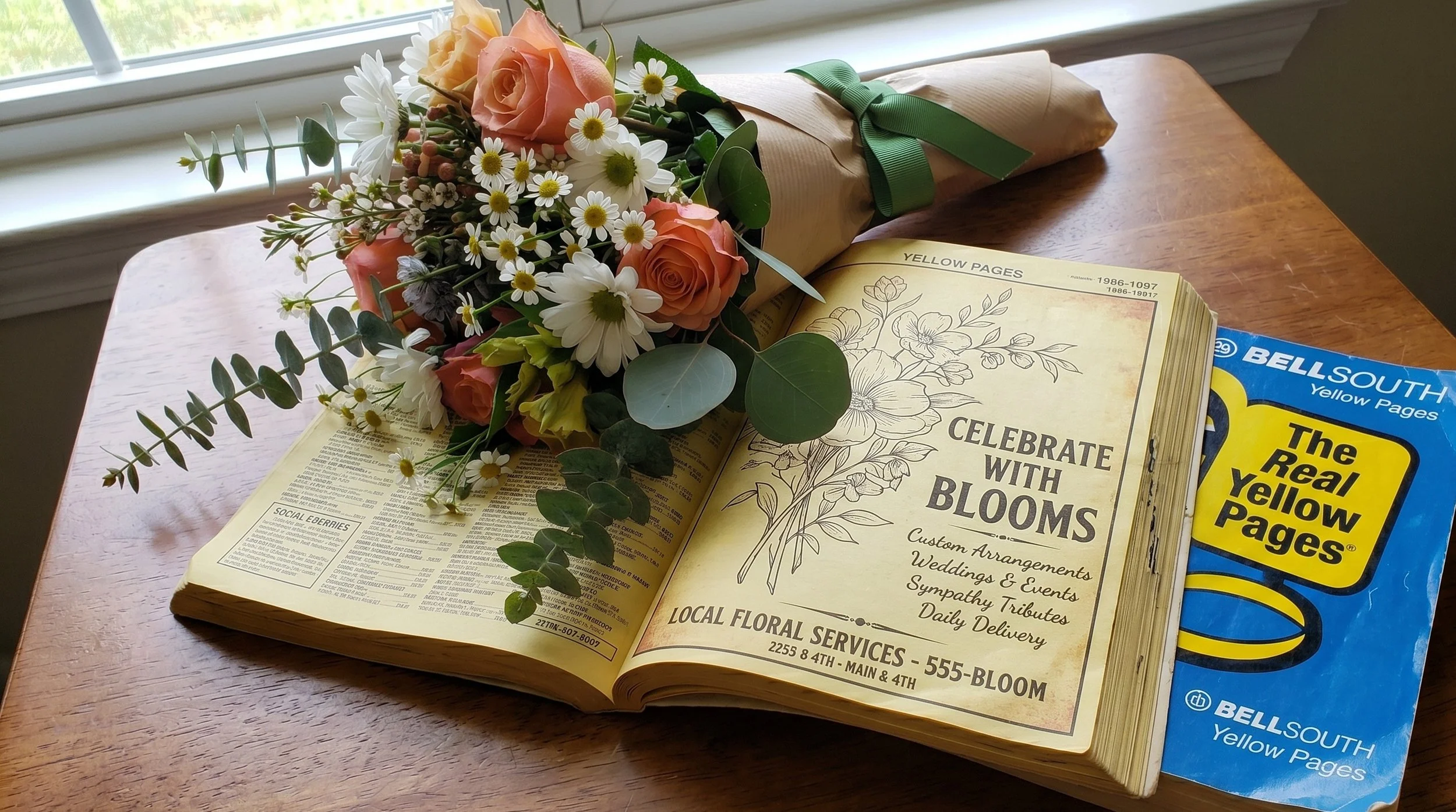
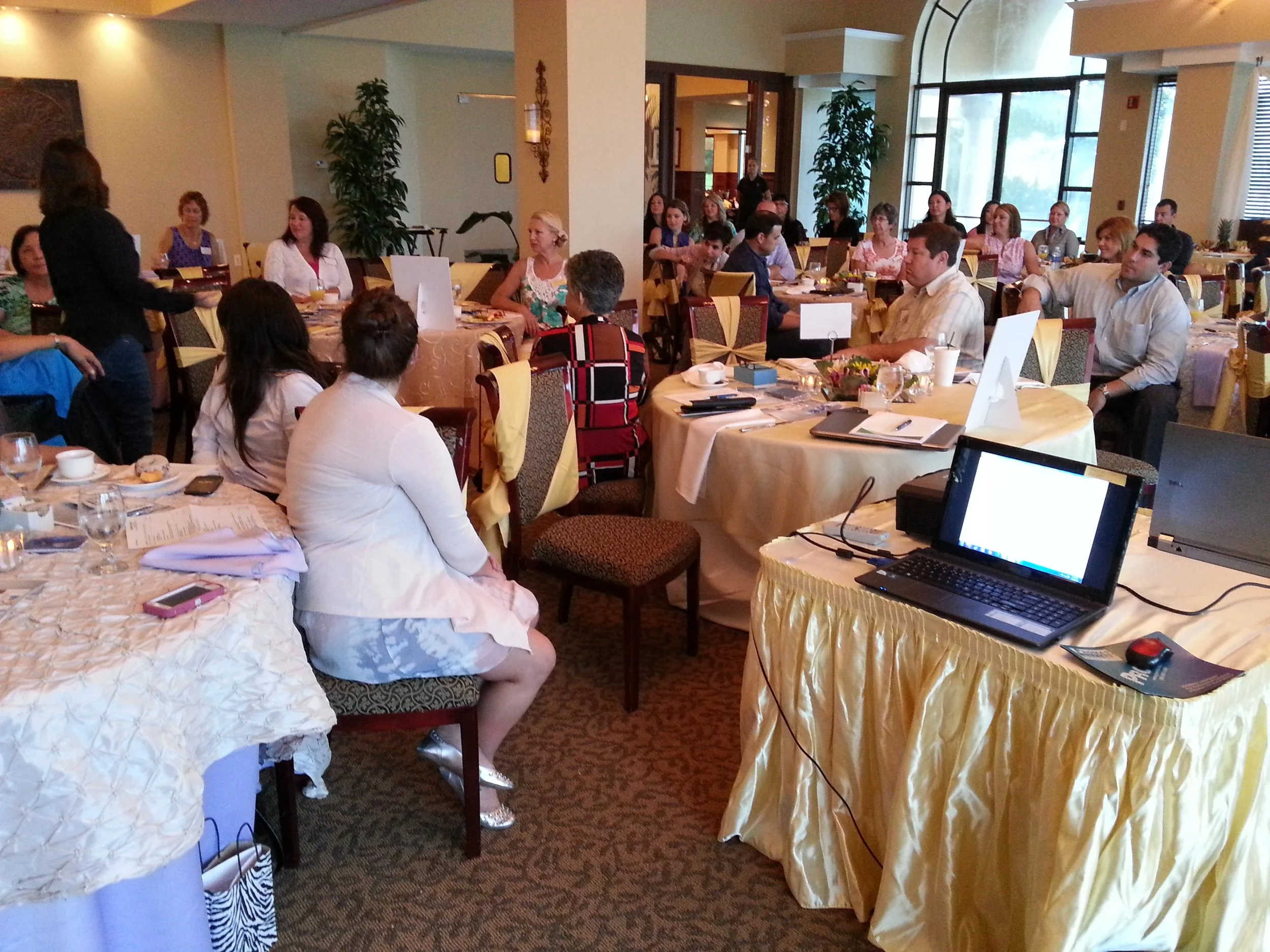
Back in the early 1990s, I found myself sitting in a room with about 30 florists here in Sarasota. At the time, the Yellow Pages were one of the most powerful advertising tools available, and a company out of Boston had just taken out a large ad targeting our market.

Naturally, it got everyone’s attention.

The reaction in the room was immediate—and unanimous. The plan was to boycott them. Refuse their orders. Shut them out completely. The thinking was simple: if we all worked together, we could stop them from gaining any traction.

Everyone agreed. Everyone except me. I remember raising my hand and saying, “You’ve got this all wrong.”

The company from Boston wasn’t doing anything unethical. In fact, they were doing something smart. They had figured out that the Yellow Pages offered a significant discount—around 40%—for businesses advertising outside their local area. They saw an opportunity and took it.

A rare look inside the Sarasota florist meeting in the early 1990s where most chose to resist change, and one chose to rethink the opportunity.

My question to the room was simple: If it’s such a great deal, why aren’t we doing the same thing?

Instead of trying to block them, I chose a different approach. I picked up the phone and called them directly. I told them if they ever had trouble fulfilling orders in Sarasota, I’d be happy to handle them.

That one decision—to collaborate instead of resist—stuck with me.

Turning an Idea Into Opportunity

Years later, that moment came back to me when I started Coast to Coast Flowers in 1998. I took the same concept and expanded on it. We placed ads not just locally, but across different markets and especially along the West Coast. There was a strategic reason behind it.

When business slowed down for us in Florida around lunchtime, it was just the start of the day in California. By placing ads in those markets, we created a flow of incoming orders that filled our slower hours. While other shops were winding down, we were just getting started again. It balanced the day, increased efficiency, and ultimately drove more revenue. And it worked.

The Bigger Lesson

Looking back, the lesson isn’t really about Yellow Pages ads, it’s about mindset. Too often, businesses respond to competition by trying to shut it down instead of understanding it. They see something new or different and their first instinct is to resist it.

But the real opportunity usually lies in asking a better question: What are they doing right—and how can I use that to my advantage?

The businesses that grow aren’t always the ones with the biggest budgets or the loudest voices. They’re the ones willing to think differently, adapt quickly, and take action when others hesitate.

Getting in the Game

At the time, I didn’t know how that decision would play out long-term. You rarely do in the moment. But experience has a way of showing you what works—and what doesn’t.

Many of the businesses that sat in that room that day are no longer around. Not because they weren’t good at what they did, but because they chose to resist change instead of embracing opportunity.

Today, the tools have changed. It’s no longer the Yellow Pages—it’s digital marketing, search, AI, and new platforms that are constantly evolving. But the principle is exactly the same.

Opportunities are always there. The question is whether you’re willing to recognize them—and act on them. Because at the end of the day, success in marketing isn’t just about being present. It’s about getting in the game—and making a difference.


Ready to Stop Following—and Start Leading?

The businesses that grow aren’t waiting for opportunities—they’re creating them. If you’re ready to take a smarter, more strategic approach to your marketing, we can help you uncover the opportunities others are missing. Call Us Today and let’s talk about how to put your business in position to win.

When SEO Misses the Point: A Lesson from International Women’s Day

Every page on a website should have a purpose. In digital marketing, especially for local businesses like flower shops, the goal of a page is simple: create awareness, capture search traffic, and connect customers with meaningful occasions. When that purpose is ignored, the page becomes little more than filler content.

Recently, I came across a blog post created for a florist promoting flowers for International Women’s Day. At first glance it looks acceptable. The writing is polite, the message is positive, and it talks about honoring women. But when you look at it through the lens of SEO and customer awareness, you quickly notice a major problem. The page mentions International Women’s Day, but it never clearly states the most important detail: the date.

International Women’s Day is celebrated every year on March 8th. That single detail is one of the most important search signals a florist can include on a page dedicated to the holiday. People search phrases like:

  • “International Women’s Day flowers March 8”

  • “Send flowers for Women’s Day March 8”

  • “Florist International Women’s Day delivery”

Without the date, the page misses a key opportunity to match what customers are actually searching for.

Below is a portion of the example page.


While the content mentions the holiday and references that it is observed on March 8th, the page itself is not structured around the search intent, the buying opportunity, or the urgency of the date. It reads more like a general description of the holiday rather than a strategic marketing page designed to drive traffic and orders. That raises an important question. What is the purpose of the page?

If the purpose is simply to fill space on a website, then the job is done. But if the purpose is to build visibility, attract customers, and help people celebrate meaningful occasions with flowers, the page falls short.

It is also important to note that the owner of the agency responsible for creating this page has intentionally been omitted from this discussion to avoid unnecessary embarrassment. The purpose of this article is not to criticize an individual but to highlight a common problem that occurs when SEO content is created without a clear strategy or understanding of how people actually search.

Great SEO content for florists should do several things clearly:

  1. State the holiday and the date prominently

  2. Explain why flowers are an important part of the celebration

  3. Encourage customers to order early

  4. Highlight delivery options and featured arrangements

  5. Use search-friendly language that matches real customer searches

Instead of a generic message, a strong introduction might look something like this:

“International Women’s Day is celebrated every year on March 8th, a global day honoring the achievements and strength of women. Flowers have become one of the most meaningful ways to recognize the women who inspire us every day. If you’re looking to celebrate International Women’s Day with a beautiful bouquet, ordering early ensures your flowers arrive on time for this special occasion.”

That approach connects the holiday, the date, and the purchasing opportunity in a way that helps both the customer and the search engines.

Another issue is awareness. International Women’s Day is celebrated around the world, yet surprisingly very few florists actively promote it on their websites. That is a missed opportunity. Florists are in the celebration business. Recognizing holidays like this should be part of their responsibility to their customers and their communities.

When florists showcase holidays like International Women’s Day, they are doing more than selling flowers. They are helping people express appreciation, respect, and gratitude for the women who shape our lives.

Digital strategists play an important role in this process. Clients trust the professionals managing their websites to recognize important occasions and create meaningful content around them. That trust carries responsibility. When you know better, you should ask questions.

  • Does the page clearly highlight the date of the holiday?

  • Does it explain why flowers are meaningful for the occasion?

  • Does it help customers discover the business online?

  • Does it create awareness for an important celebration?

If the answer is no, the content is not doing its job.

Before hiring anyone to manage your website or digital marketing, it is always wise to check their references and their results. Look closely at the pages they create. Are they thoughtful? Are they strategic? Do they help your business connect with real celebrations and real customers?

At the end of the day, florists are storytellers. Every holiday, every bouquet, and every delivery represents a moment in someone’s life. International Women’s Day is one of those moments.

Our role in digital marketing is to make sure those moments are seen, understood, and celebrated. We can help you with that as well. Give us a call and let’s get started today!

The $19.95 Bouquet That Cost $58: What Florists Are Really Up Against

Every year, especially as holidays approach, we see it again: “flowers in a box” deals that sound too good to be true. And more often than not, they are.

Recently, my son had a customer call in asking for a bouquet she saw online for $19.95. Her immediate reaction? Your flowers are too expensive. He did what many florists would do — paused, questioned himself, and wondered how anyone could possibly deliver quality flowers at that price.

So I decided to find out.

Following the $19.95 Deal All the Way to Checkout

I placed the order myself to see exactly how these offers work. At first glance, it looked straightforward: a $19.95 bouquet advertised as a great value. But as I moved through the checkout process, things started to change — fast. By the time the order was complete, that $19.95 bouquet cost $58.

Extra charges appeared for:

  • A vase (not included)

  • “Extended freshness”

  • Handling and packaging add-ons

This is where many consumers get caught. They enter the process expecting one price, only to discover — too late — that they’ve spent two to three times more than planned.

What Actually Arrived

The flowers arrived days later — not same-day delivery like a local florist provides. They came in a box, unassembled, with instructions inside.

That meant:

  • The recipient had to assemble the bouquet themselves

  • Exposed wires that could easily cause injury

  • No greenery

  • A small number of flowers that, at retail, would sell for $10–$12 in a local shop

When everything was laid out, the result was a modest arrangement that any florist would price around $50 — yet it was marketed online as a $19.95 bargain.

What Local Florists Deliver — That Boxed Flowers Don’t

This comparison highlights what professional florists offer every single day:

  • Same-day delivery

  • Hand-designed arrangements

  • Quality-controlled flowers

  • No assembly required

  • Transparent pricing

  • Personal service

None of that happened with the boxed order. Instead, the customer paid more, waited longer, and received less — all while believing they were getting a deal.

Why This Matters for Florists

Florists are constantly competing against misleading online marketing, not fair pricing. These companies rely on low headline prices to hook buyers, knowing the real cost won’t be clear until checkout. The result?

  • Florists appear “expensive” by comparison

  • Customers feel confused or disappointed

  • Trust in the floral industry erodes

This isn’t innovation. It’s deception.

A Reminder as Holidays Approach

As sales volume increases around major floral holidays, these boxed-flower promotions will only become more aggressive. Florists shouldn’t feel pressured to race to the bottom — because quality, service, and honesty still matter. And for buyers: if a deal looks too good to be true, it probably is. Local florists deliver real value. No fine print. No assembly required.


If you’re tired of competing against misleading online flower deals and want to position your shop on value, transparency, and trust, Bloomerang Solutions is built specifically for real florists. From our Florist Website Design services and SEO for Florists, to email marketing strategy and consulting, we help shops stand out for the right reasons. Learn more about Bloomerang Solutions, explore how we help florists compete online, read additional insights on our Blog, or contact us to talk about your goals and challenges heading into the next floral holiday season.

Why Digital Video Ads Outperform TV for Florists (And the Simple Math No One Shows You)

People no longer sit down to watch television the way they used to. Today, your customers are watching their phones more than their TVs—and that shift has completely changed how florists should advertise.

Instead of buying expensive TV commercials that people skip, ignore, or forget, florists can now run local digital video ads that reach targeted customers for pennies. Not nationwide. Not statewide. Just in your local delivery area. Which means every dollar works harder.

The Secret Agencies Don’t Tell You: Digital Beats TV Every Time

Traditional media outlets won’t tell you this, but the truth is simple:

Digital video ads cost less, reach the right people, and deliver measurable results.

A florist doesn’t need a national campaign. They need locally targeted visibility at the moment customers are shopping… and that happens online, not on television.

And the pricing? Most people wouldn’t believe it until they see the numbers.

Why Digital Is Perfect for Florists: Flowers Are Visual

Flowers sell best when customers can see them. Video stops people mid-scroll and shows your brand, your arrangements, and your style in seconds.

Is it interruptive? A little—but that’s how the internet works. Everyone is competing for attention. The florist who shows up first wins the order.

How TV Fails Florists in 2025

Traditional TV ads suffer from the same problem:

  • Viewers leave the room

  • They fast-forward

  • They look at their phones

  • They forget the ad almost instantly

You pay for exposure… with no proof anyone actually saw you.

How Digital Video Ads Work (and Why They’re Better)

Digital ads on Google and social platforms solve every weakness of television:

Shown only to relevant local customers

Track clicks, calls, and conversions

Retarget viewers who showed interest

Scale, pause, or adjust instantly

Performance is measured in real numbers—not guesses

TV gives you exposure. Digital gives you accountability.

Real Florist Case Study: Detroit Campaign

Here’s what ONE florist achieved in November:

  • 191,753 views (impressions—may not all be full views)

  • $1,084 total ad spend

  • Cost per view: just over half a penny

  • 2,044 people clicked and actively engaged

That means 2,044 real people saw your shop, not your competitor.

For the cost of one minute of prime-time TV, this campaign delivered almost 200,000 local views and full tracking of results. No guesswork. No wasted spend. Just clean, measurable impact.

Why Florists Aren’t Doing This Already

Honestly? Most florists don’t even know this is possible. Digital advertising feels complicated. TV is familiar.

But familiarity doesn’t make it effective. Now that you understand the numbers—and the opportunity—you’re already ahead of 90% of your competitors. This isn’t just buying eyeballs. It’s buying intent, action, and results.


Q&A: Digital Video Ads for Florists

Q: Do I need a professionally filmed video to run digital ads?

No. Even simple, clean videos showcasing your arrangements perform extremely well. Professional videos help, but they’re optional.

Q: How local can these ads be?

You can target by city, ZIP code, radius around your shop, or delivery area. You only pay to reach your customers.

Q: Can I control how often people see my ad?

Yes. You can set daily budgets, caps, schedules, and frequency limits. You’re fully in control.

Q: How is this better than boosting a post on Facebook?

Boosted posts are broad and unpredictable. True digital video ads target specific buyer intent, track actions, and optimize toward results.

Q: How quickly can I see results?

Most florists see impressions and traffic within hours. Campaigns can be scaled for holidays, Valentine’s Day, Mother’s Day, and other peak periods.

Q: Is digital advertising expensive?

No. As shown in the Detroit example, florists can get views for half a penny. You spend what you’re comfortable with.


Final Takeaway

The advertising world has shifted. Your customers are online, your competitors are online. And the florists who adapt now will dominate search results, video feeds, and local visibility for years to come.

Digital video ads aren’t the future. They’re the present—and they’re the smartest investment a florist can make. Ready to get started? Contact Us today.

What Is Yext—and How Is Bloomerang Solutions Different?

When businesses talk about “fixing their online listings,” they often assume every provider does it the same way. But not all listing management tools work equally and understanding the difference can determine whether your online information stays accurate long-term or disappears the moment you stop paying.

At Bloomerang Solutions, we’ve spent years correcting business listings for florists and local businesses nationwide. One of the most common points of confusion we see is around Yext - what it is, how it works, and why it behaves differently from true, permanent directory updates.

Below is a clear breakdown you can share with your team, employees, or clients.

Yext Is an Overlay, Not a Permanent Edit

When you use Yext, you’re not actually changing the information inside the directories themselves. Instead, you’re renting a data layer that sits on top of your listings.

Yext uses API connections to push your business information - name, phone, hours, address, etc.- onto dozens of directories. As long as your monthly subscription is active, that overlay stays in place.

But once you stop paying? The overlay disappears, and each directory instantly reverts back to whatever outdated information it originally had. Nothing was rewritten inside their native database.

Think of it like renting a billboard on top of a building. When you stop paying for the billboard space, the original sign underneath is still there.

Why Yext works this way:

  • Yext does not give you ownership of your listings.

  • They maintain the data connection, not the directory itself.

  • Removing that API connection removes the corrections.

  • You’re paying for continuous synchronization, not long-term accuracy.

This is why many businesses see their hours or phone number “suddenly change back” after canceling Yext.

Bloomerang Solutions Uses Permanent Placement, Not Temporary Overlays

Bloomerang takes a completely different approach.

Instead of renting an overlay, we perform true source corrections. That means when we update a directory, the change is written directly into the directory’s native database.

Once updated, the directory treats that information as the new, correct version just like a direct edit inside Google Business Profile.

With permanent placement:

  • Your edits stay in place even if you cancel.

  • The directory no longer holds the old data.

  • You own the corrected listing.

  • No ongoing API connection is required to “hold” your information in place.

This gives businesses real, lasting value instead of rented visibility.

In Short: The Core Difference

Yext

  • Rented overlay

  • Temporary placement

  • If you stop paying, your listings revert back to old data

Bloomerang Permanent Placement

  • True source corrections

  • Long-lasting, owned edits

  • If you stop paying, your updated listings remain in place

Why This Matters for Contracts

Because our work results in permanent improvements, Bloomerang clients keep the value even if they leave us. The corrected listings don’t disappear, and we don’t “pull back” your data the way an overlay system does.

This is exactly why we require contracts. Clients can cancel, but they keep the benefits.

Once your listings are corrected, they remain corrected. That creates long-term value for your business, not temporary patchwork.