For years, the goal of online marketing was simple: get your flower shop to rank higher on Google. If someone searched for "florist near me" or "same-day flower delivery," you wanted your business to appear at the top of the results.
That goal hasn't changed but the way people search is changing rapidly.
Today, customers aren't just using Google. They're also asking questions directly to AI tools like ChatGPT, Gemini, Claude, and Microsoft Copilot. Instead of typing a search phrase, they might ask:
"Who is the best florist in Sarasota?"
"What flower shop offers same-day delivery near me?"
"Which florist has the best reviews in town?"
This shift has introduced a new concept called Generative Engine Optimization (GEO).
The good news? Florists don't have to choose between SEO and GEO. The most successful flower shops will use both.
What Is SEO?
Imagine your flower shop is located in a city with thousands of competing florists.
When someone searches Google for:
Florist near me
Send roses today
Birthday flowers delivered
Google has to decide which businesses deserve to appear first.
Search Engine Optimization (SEO) is the process of helping Google understand:
Who you are
Where you're located
What products and services you offer
Why customers trust your business
Think of SEO as putting clear signs on every road leading to your flower shop. The easier it is for Google to understand your business, the more likely it is to send customers your way.
A Simple SEO Example
Imagine your website clearly states:
Sarasota Florist
Same-Day Flower Delivery
Roses, Birthday Flowers, Sympathy Flowers
Your address and phone number
Customer reviews
Google sees that information and thinks:
"I know exactly what this flower shop does. I can confidently show it to searchers."
That's SEO in action. Its primary job is simple: Help customers find your flower shop.
What Is GEO?
Now imagine a customer never visits Google. Instead, they open ChatGPT and ask:
"Who is the best florist in Sarasota?"
The AI isn't looking for keywords the same way Google does. Instead, it tries to identify businesses that appear trustworthy, experienced, and frequently mentioned across the web. That's where Generative Engine Optimization (GEO) comes in.
GEO helps AI platforms understand who you are and why your business deserves to be recommended. Think of GEO like building such a strong reputation that the smartest student in school keeps telling everyone they should visit your flower shop.
A Simple GEO Example
Let's say your website includes information about:
Your company's history
Your design team
Wedding expertise
Sympathy and funeral services
Delivery areas
Community involvement
Helpful flower care tips
Customer testimonials
An AI system reviews that information and learns: "This florist clearly knows what they're doing."
When someone asks for a recommendation, that florist is more likely to be mentioned. That's GEO. Its primary job is: Help AI recommend your flower shop.
The Key Difference Between SEO and GEO
While they work together, SEO and GEO focus on different goals.
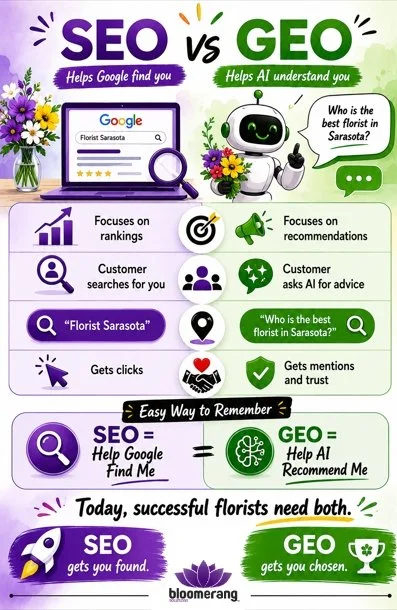
SEOGEOFocuses on rankingsFocuses on recommendationsHelps Google understand your websiteHelps AI understand your businessOptimizes for searchesOptimizes for conversationsGenerates clicks and trafficGenerates mentions and trustTargets search enginesTargets AI assistants
In simple terms:
SEO helps people find you.
GEO helps AI recommend you.
Why Florists Can't Ignore GEO
Many flower shop owners assume that ranking well in Google is enough.
For now, SEO remains incredibly important. Customers still perform millions of searches every day.
But more consumers are becoming comfortable asking AI tools for advice and recommendations before making decisions.
Instead of searching:
"Florist Sarasota"
They may ask:
"Who is the most trusted florist in Sarasota for sympathy flowers?"
That's a completely different type of search behavior.
If your business only focuses on traditional SEO, you may miss opportunities to appear in these AI-generated recommendations.
The Good News: Good SEO Helps GEO
One of the biggest misconceptions is that GEO replaces SEO.
It doesn't.
In fact, many of the same things that improve SEO also improve GEO:
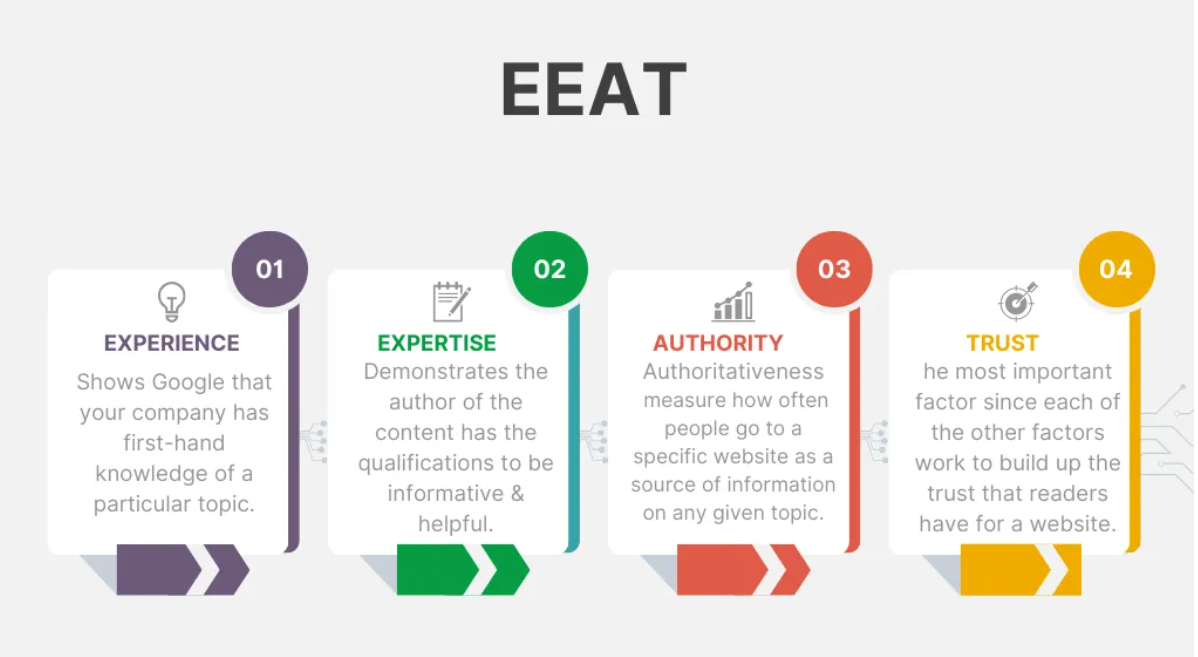
Well-written website content
Detailed service pages
Accurate business information
Strong customer reviews
Local authority
Community involvement
Consistent branding
Helpful educational content
A flower shop with a strong SEO foundation is already taking many of the steps needed for GEO success.
The difference is that GEO encourages businesses to provide deeper information about who they are, what makes them unique, and why customers trust them.
What Florists Should Be Doing Right Now
To position your flower shop for both Google and AI search, focus on:
Strengthening Your SEO
Optimize your website pages
Improve local search visibility
Build customer reviews
Maintain accurate business information
Improve website speed and performance
Strengthening Your GEO
Tell your business story
Showcase your experience
Highlight specialties and expertise
Publish helpful content
Share community involvement
Demonstrate authority in the floral industry
The more information available about your business, the easier it becomes for both search engines and AI systems to understand and recommend you.
The Future Belongs to Businesses That Do Both
The online landscape is evolving, but the goal remains the same:
Help customers discover your business and feel confident choosing you.
SEO helps your flower shop get found.
GEO helps your flower shop get chosen.
The most successful florists moving forward won't focus on one or the other. They'll build a strong presence that serves both search engines and AI assistants.
Because in today's digital world, visibility matters—but trust matters even more.
Ready to Improve Your SEO and GEO?
At Bloomerang Solutions, we help florists build websites and marketing strategies designed for both traditional search engines and the next generation of AI-powered recommendations.
Whether you're looking to improve your Google rankings, strengthen your online authority, or position your flower shop for AI search, we're here to help.
Contact Bloomerang Solutions today and let's make sure your flower shop gets found and chosen.